
Skin Classic
Skin Classic, also known as thermolysis, is a direct, high-frequency, non-laser machine that uses a probe to treat minor skin irregularities.
What Does Skin Classic Treat?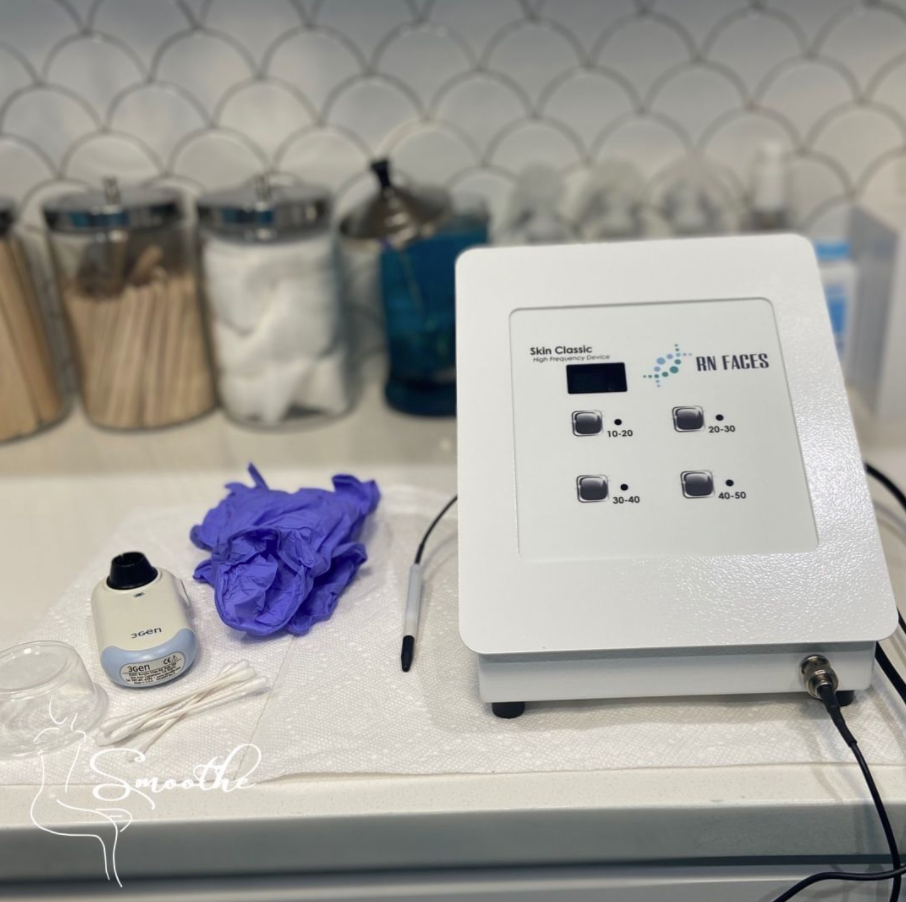
The irregularities that can be treated by Skin Classic are telangiectasias (broken capillaries), cherry angiomas, keratosis, fibromas, skin tags, hyperpigmentation, milia, sebaceous hyperplasia, and acne pimples/blackheads. The probe itself delivers direct high frequency to the area that will be treated. To be more specific, we do not remove skin irregularities, we treat them with Skin Classic by dehydrating the skin irregularity (or irregularities) so they will naturally slough (or fall off) in a matter of days. The smaller the treatment, the quicker it tends to slough off! Learn more about the skin irregularities we are able to treat with thermolysis below.
Telangiectasis (Broken Capillaries)
Telangiectasis, also known as spider veins, are dilated or broken blood vessels located near the surface of the skin or mucous membranes. They can develop anywhere on the body but are often found on the face, nose, cheeks, and chest. They often appear as fine pink or red lines that temporarily whiten when pressed. Telangiectasis can be caused by scleroderma, dermatomyositis, lupus, chronic sun damage, and more.
Cherry Angiomas
Cherry Angiomas are small, pinhead-like lesions on your skin that appear most commonly on your torso, arms, and legs. They are round, form a small dome, are flat-topped, and are about two millimeters to four millimeters in size. They are typically light to dark red or purple and form in groups. Around 50% of adults have cherry angiomas on their skin after age 30. Anyone can get cherry angiomas but they generally appear as you get older. They can also be caused by pregnancy, genetics, and excessive sun exposure.
Seborrheic Keratosis
Seborrheic keratosis is a non-cancerous or benign skin growth. Like cherry angiomas, seborrheic keratoses are seen more as we age. They are usually brown, black, or light tan and appear waxy, scaly, and slightly raised. They will often be round or oval and look like a scab or wound. Seborrheic keratoses are commonly found on the face, chest, shoulders, and back. They are typically painless, however, they can easily be irritated by clothing or friction and can be itchy.
Fibromas
A fibroma is a non-cancerous tumor that is made up of fibrous tissue. They can occur almost anywhere on your body and there are many different types. The type we typically see is angiofibromas which are growths made up of blood vessels and fibrous tissue. They look like small, flesh-covered, pink or red pimples on your cheeks or nose.
Skin Tags
A skin tag is also a benign or non-cancerous tumor that primarily forms in the areas where the skin creases. This includes the neck, eyelids, breasts, and underarms. They may be the same color as your skin or darker. They may also look pink or turn red when they are irritated. Most skin tags are about the size of a grain of rice but can grow to be larger. They can become irritated by shaving, clothing, and jewelry, however, they are harmless. Because skin tags occur when skin rubs again skin, people who are overweight, pregnant, or have loose skin are more likely to get skin tags. You also have a higher level of developing skin tags if you have diabetes or metabolic syndrome.
Hyperpigmentation
Let’s brush up on our medical terminology, here: “hyper” means “more” and “pigment” is defined as “natural coloring matter of tissue”, so we see hyperpigmentation in liver spots (age spots) and sun spots, often defining it as “any patch of skin that looks darker than your natural skin tone because the brown pigment melanin is being overproduced”. In reality, the spots can be brown, black, gray, red, or pink and can occur in just one area of the body or all over. Hyperpigmentation can be caused by adrenal disorders, melasma, not getting enough vitamins, sun damage, thyroid disorders, medications, injury to the skin, hormone changes, genetics, inflammation, and more.
Milia
Milia is a keratin-filled cyst (white bump) that appears under the surface of your skin. It is very common in newborns but adults can get milia too. Milia are harmless and will sometimes go away on their own. They are often confused with whiteheads.
Sebaceous Hyperplasia
Sebaceous hyperplasia is a common, benign condition of sebaceous glands in adults of middle age or older. Lesions can be single or multiple and manifest as yellowish, soft, small papules on the face (particularly nose, cheeks, and forehead).
Cystic Acne
Pimples start when a pore in your skin gets clogged, usually with dead skin cells. The bacteria gets trapped in the pore and then causes the area to become red and swollen. Cystic acne occurs when this infection goes deep into your skin creating a bump that is large, red, painful, and deep in your skin. If the cyst bursts without professional treatment, it can cause the infection to spread and lead to more breakouts. Cystic acne can affect large areas of your skin and leave scars.
Blackheads
Blackheads, or comedones, are small black bumps that appear on your skin due to clogged hair follicles. A comedo or bump is formed when dead skin cells and oil collect in the opening of a skin follicle. If the skin over the bump stay closed, the bump is called a whitehead. If the skin over the bump opens, exposure to the air causes it to look black and a blackhead is formed. Blackheads are slightly raised but are not painful like pimples or cystic acne.
Skin Classic Pricing
Treatment for One Skin Irregularity – $30
Treatment for Up to Five Skin Irregularities – $150
Unlimited 15-Minute Treatment Session – $300
Unlimited 30-Minute Treatment Session – $500
Does Skin Classic Hurt?
No! We’re here to let you know that you will experience a very quick “stinging” sensation that lasts only for the time the probe is touching the skin irregularity. Most areas take seconds to treat, and then we move on to the next area. The eye area, nose, and neck area are definitely the most sensitive, but we promise, it’s worth the minor discomfort. For more frequently asked questions, visit our latest blog post.
Book your Skin Classic Treatment today! We look forward to seeing you soon.